Your Drilling Contractors Are All Using Different Systems. Here’s What That’s Costing You.
You’re running four active drilling programs. You’ve engaged three different contractors. Each one uses a different system to capture their daily drilling reports, one uses paper, one uses their own proprietary app, and one sends through a spreadsheet at the end of the week. And every Monday morning, your geologists spend the first few hours of their day chasing, reformatting and reconciling data before they can do any actual geology.
If this sounds familiar, you’re not alone. For most Australian mining companies, managing Daily Drilling Data from multiple drilling contractors is one of the most time consuming and error prone parts of running an exploration program. It’s a problem that’s been quietly accepted as normal, when it really shouldn’t be.
In this article, we break down exactly what this problem costs you, in time, money, data quality and compliance risk, and what a better approach looks like.
What Is a DDR, and Why Does It Matter?
A Daily Drilling Report (DDR), also known as a PLOD (Progressive Log of Drilling), is the core data record produced by a drilling contractor at the end of every shift. It captures everything that happened at the rig: location, drill activities, metres drilled, consumables used, personnel on site, equipment hours, survey data, drill bits used, and any downtime or incidents.
These reports are the foundation of your drilling program data. They inform resource estimates, cost reconciliation, JORC compliant reporting, and every key decision your operations and exploration teams make throughout a program.
The problem isn’t the DDR itself. The problem is how mining companies are currently receiving, managing and reconciling DDR data, especially when multiple contractors are involved.
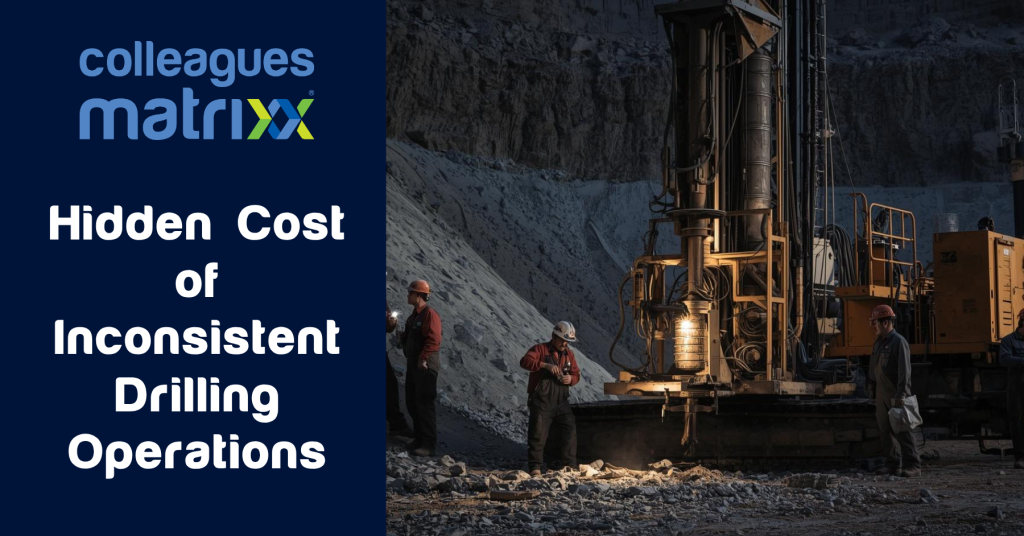
The Multi-Contractor Mining Data Problem
Here’s a scenario that plays out across Australian exploration programs every single week.
Imagine a mid tier mining company running six concurrent projects across Western Australia. They’re working with four different drilling contractors simultaneously. Each contractor has their own internal system for capturing and submitting DDRs:
- Contractor A uses paper-based PLOD sheets, scanned and emailed as PDFs
- Contractor B uses a digital app that exports data as CSV files
- Contractor C submits data through their own proprietary client portal
- Contractor D uses a basic spreadsheet template shared via email
None of these formats are consistent. None feed directly into the mining company’s internal systems. And so, every day, someone on the operations team, typically a geologist, has to log into multiple platforms, download files, manually reformat the data, upload it into their database, and cross check it for errors before it can be used for anything.
According to industry estimates, this manual DDR reconciliation process costs geologists an average of 2 to 3 hours per day. Across a year, on a single project, that’s hundreds of hours of skilled technical time spent on data admin.
The Hidden Risks Beyond Lost Time
Time is the visible cost. But the real risk goes deeper.
1. Data Quality Errors
When data is manually transferred between systems, errors creep in. Handwritten reports are misread, CSV columns are misaligned, and survey data is entered incorrectly. These are daily occurrences on programs relying on manual DDR workflows.
In exploration, data errors don’t just cause admin headaches. They can distort geological models, skew resource estimates, and ultimately affect investment decisions worth millions of dollars.
2. Broken Chain of Custody
A chain of custody in the context of drilling data refers to the secure, auditable trail of who captured the data, who approved it, when it was submitted, and whether it has been altered at any point. This is a compliance requirement under JORC (Joint Ore Reserves Committee) and NI 43-101 reporting standards.
When DDR data passes through emails, shared drives, CSV exports and manual uploads, the chain of custody is effectively broken. There’s no single, verifiable record of what was submitted, by whom, and when, which creates significant compliance risk at the point of resource reporting.
3. No Real-Time Visibility
When data arrives in batches, weekly spreadsheets, end of day PDFs, operations managers are always working with a lag. Decisions about rig utilisation, consumables, and program direction are made on yesterday’s data at best. In a fast-moving program, that lag has real operational consequences.
4. Contractor Duplication
Here’s a friction point that often goes unacknowledged: when a mining company specifies a particular reporting format or system, contractors who use a different system are forced to enter the same data twice, once into their own system, and again into the format the client requires. This adds time and cost on the contractor side, and often introduces transcription errors that ultimately land back with the mining company’s team to resolve.
What Good DDR Software Should Actually Do
Not all DDR software is created equal. There are plenty of tools on the market that digitise the PLOD form, replacing paper with a screen and that solves part of the problem, but not the one that really costs mining companies.
For a mining company managing multiple drilling contractors, the real requirement is a platform that can:
- Accept data from any source – regardless of which system the contractor uses to capture it
- Standardise that data automatically – without requiring manual reformatting or CSV manipulation
- Provide a secure chain of custody – with a verifiable audit trail from field capture through to approval
- Enable real-time approval workflows – so geologists can review, approve or reject DDRs as they’re submitted, not days later
- Integrate with existing databases – feeding clean, standardised data directly into the systems the mining company already uses
This is precisely the problem that Matrixx Xchange was built to solve. Designed in consultation with geologists and drilling professionals, Matrixx Xchange is the world’s first DDR software platform that connects drilling data from multiple contractors, regardless of what system they use, into a single, standardised, cloud-based workflow.
Exploration teams that have adopted Matrixx Xchange are significantly reducing the time spent on administrative tasks, freeing them to focus on field work.
The Logical Solution
Standardising your DDR workflow with dedicated daily drilling report software doesn’t require your contractors to change how they work. It doesn’t require months of implementation. And it doesn’t require your geologists to become data engineers.
It just requires a single platform that connects all the pieces, and gives your team back the time, visibility and confidence they need to run a world-class exploration program.
Want to see how Matrixx Xchange works?
Book a call with our team and we’ll show you how Australian mining companies are standardising DDR data across multiple contractors.